Recently, Umwelt archaeologist Alison Fenwick returned to Honeysuckle in Newcastle to work on the very same site her grandfather excavated 31 years ago.
In 1994, Alison’s grandfather, industrial archaeologist Peter Fenwick, led the first documented excavation of the Honeysuckle Point Locomotive Turntable. His work confirmed the location and historical significance of the turntable, which dates back to around 1857. The turntable played a vital role in enabling bi-directional travel for trains at the end of the Great Northern Railway line.
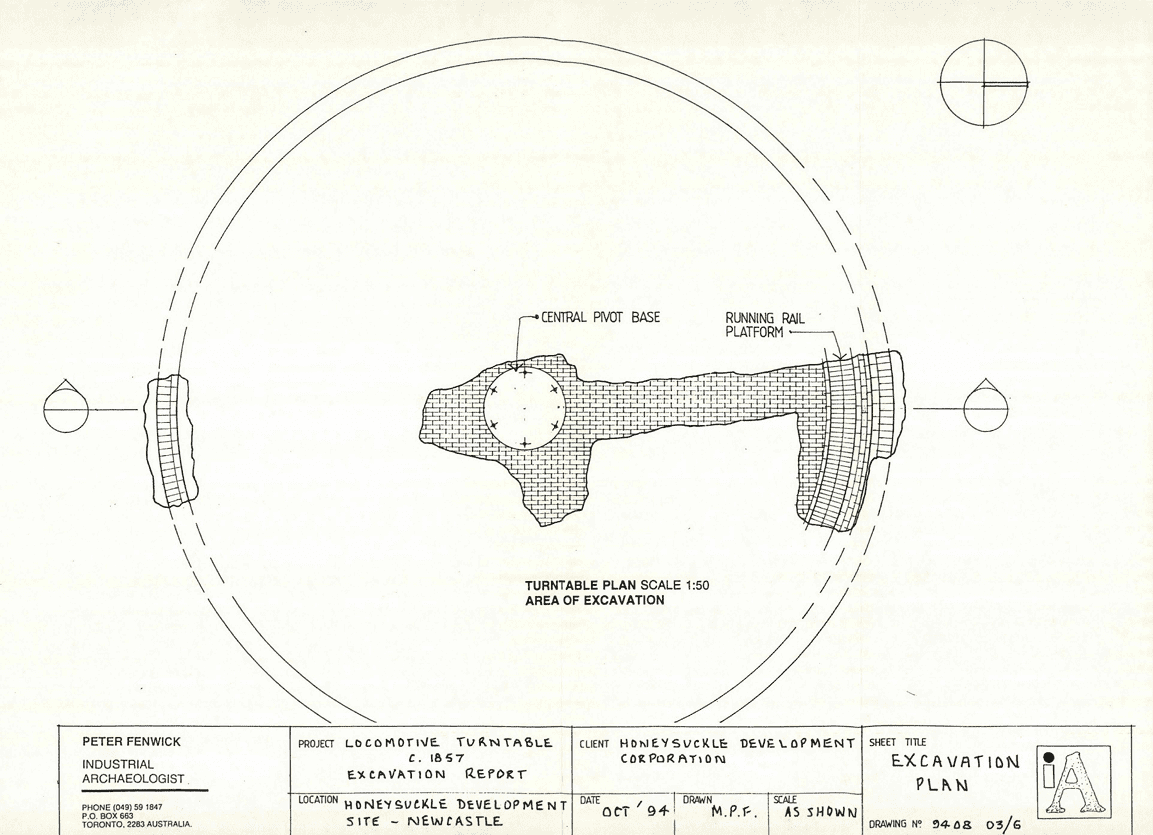
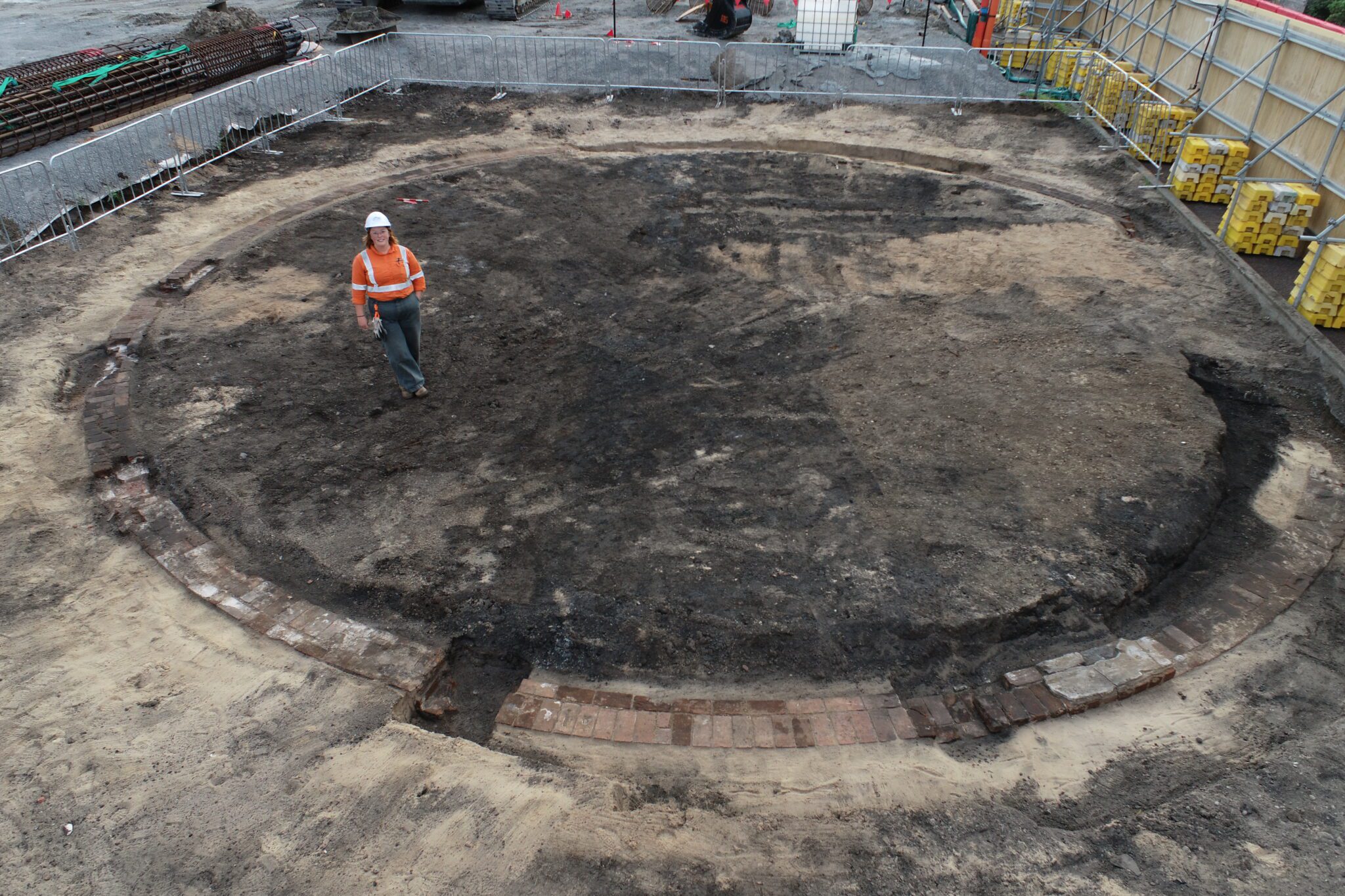
Now, 31 years later, Alison is part of the team investigating the same site as part of the University of Newcastle’s City Campus Student Accommodation project. The excavation aimed to uncover and record the full extent of the turntable, ensuring its preservation and interpretation for future generations.
My grandfather died when I was young and I didn’t know much about his work as an archaeologist. It’s wonderful to now learn that he led this important work in Newcastle, a place that I called home for many years. It feels surreal to be continuing his legacy.
– Alison Fenwick
The turntable is a significant example of early railway infrastructure. Its pit measures over 12 metres in diameter, and its rediscovery is a testament to the enduring importance of heritage conservation.
Umwelt is proud to be the Heritage and Archaeology consultant on this project, working alongside the University of Newcastle, APP, and Hansen Yuncken. The excavation is being conducted under the State Government’s State Significant Development Approval, with interpretation of the turntable to follow as part of the project.
This story is more than just an archaeological milestone. It’s a celebration of family, history, and the enduring power of place.