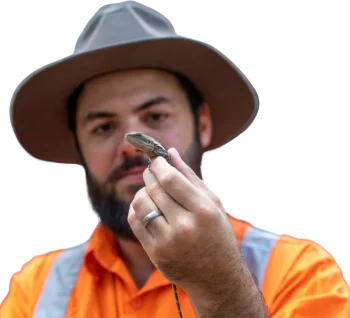
Efforts to recover the threatened superb parrot (Polytelis swainsonii) have taken an important step forward thanks to recent collaborative fieldwork that confirmed a new breeding colony in the Australian Capital Territory (ACT).
To support the ACT Government Office of Nature Conservation and researchers from the Australian National University, our ACT Ecology team recently spent time searching a defined area within the Molonglo River valley for new breeding trees for this iconic and vulnerable bird species.
How the new colony was discovered
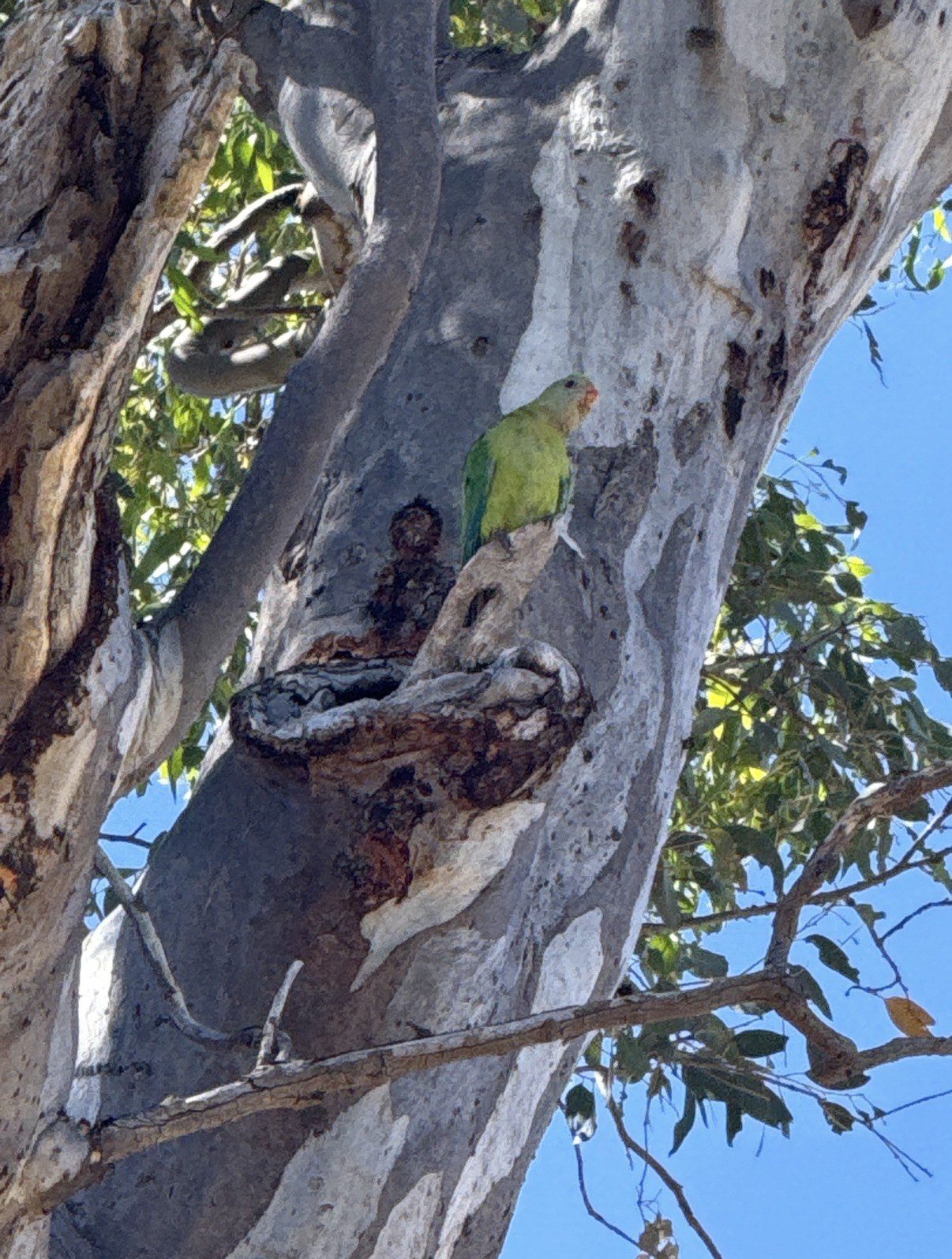
Prompted by the results of detailed GPS tracking data, scientists suspected additional nesting trees could exist in an under surveyed area of ACT woodland. Our team’s mission was to find these hidden gems. Gifted with perfect survey conditions and timing, we found five trees with potentially suitable nesting hollows. Researchers climbed each tree to inspect the hollows, ultimately confirming that one tree supported two active superb parrot nests.
With these findings, the area meets the critical threshold of four nesting trees within 1km of each other, to classify the area as supporting a ‘breeding colony’.
What this means for conservation
Superb parrots are known for their strong loyalty to specific breeding areas. Few breeding colonies of this species have been documented outside of the ACT, and only two were confirmed in the ACT, making each newly discovered nest tree vital for the species’ recovery. Confirmation of a third colony in the ACT underscores the increasing importance of this region for superb parrot conservation – particularly as climate refugia, as vast areas of the species’ range becomes increasingly inhospitable.
This highlights the need to safeguard critical habitats within the Territory. Protecting active breeding areas, and planning for their future expansion, is essential for ensuring the long-term survival of these beautiful birds.
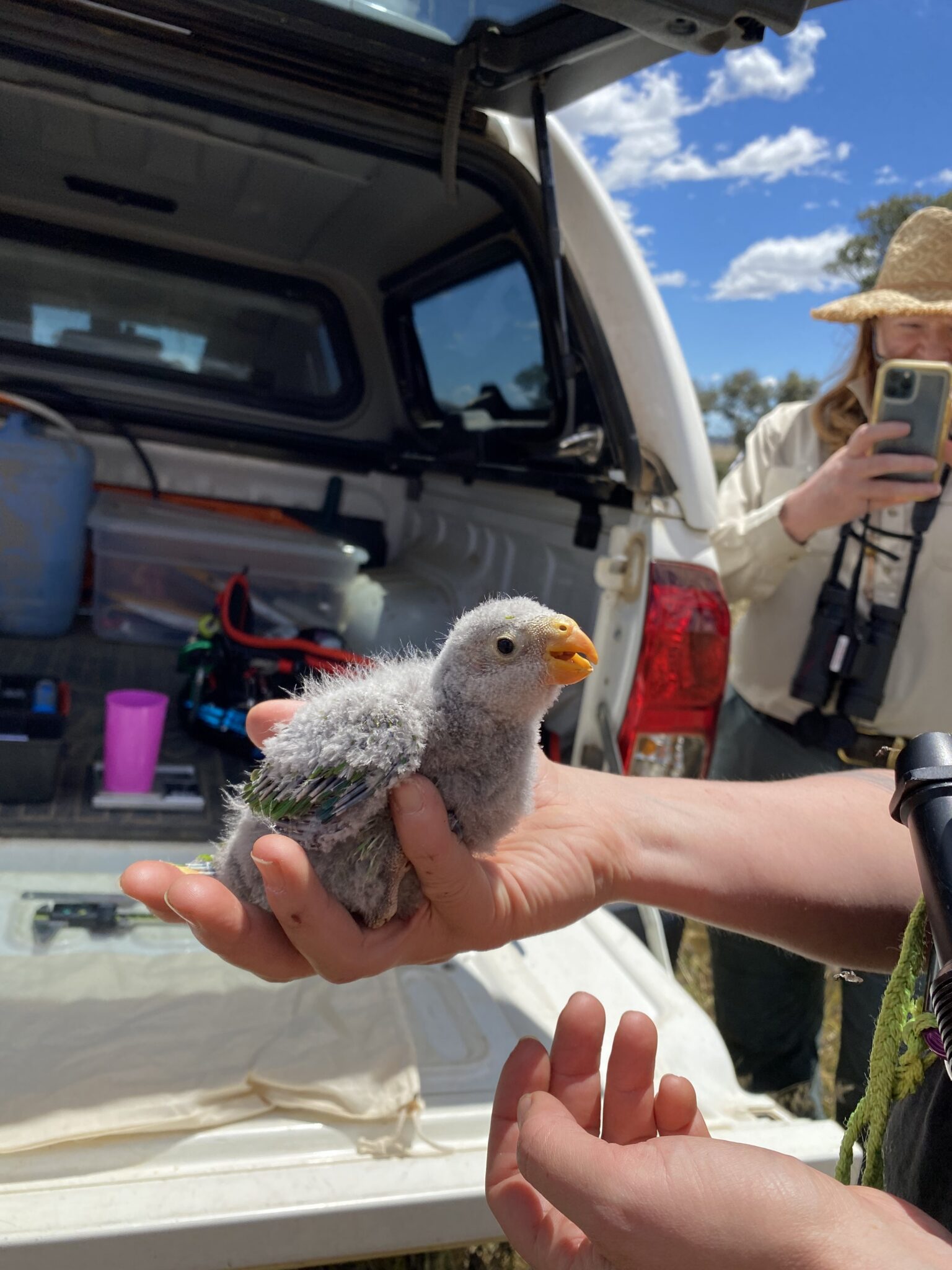
With many superb parrots calling the ACT home, ongoing monitoring and habitat protection are critical. Our team looks forward to continuing to support researchers and conservationists in their vital work.
Stay tuned for upcoming photos and videos, including charming snapshots of parrot pairs at their nests, a testament to the success of this collaborative conservation effort.